
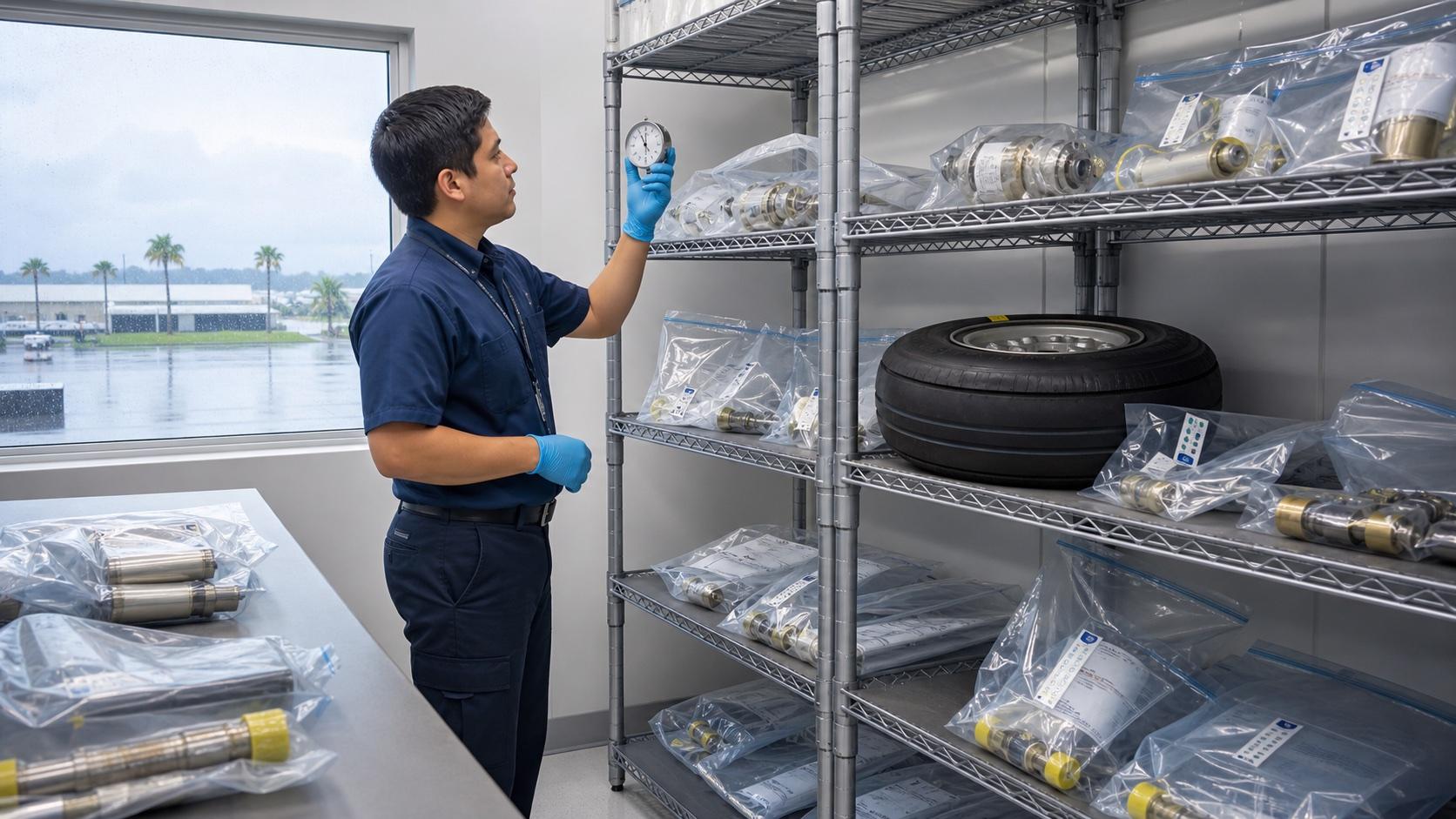
Quick answer
When aircraft parts will be stored or received in tropical climates, buyers should confirm manufacturer storage instructions, packaging condition, shelf-life status, environmental exposure, preservation records, and receiving-inspection requirements. Heat, humidity, salt air, and handling can affect materials differently, so component-specific instructions control.
Do not treat “stored indoors” as a specification
Storage suitability depends on the component and manufacturer instructions. Ask for the actual storage and preservation basis rather than relying on broad descriptions.
Elastomers, batteries, electronics, lubricated components, tires, and metal assemblies can have different environmental sensitivities.
Ask about time and environment
Confirm manufacture or cure dates when applicable, shelf-life basis, preservation intervals, packaging integrity, and any known exposure outside controlled conditions.
- Applicable manufacturer storage specification
- Temperature and humidity controls where required
- Desiccant, barrier bag, caps, plugs, and protective coating condition
- Shelf-life calculation and remaining life where applicable
- Inspection or re-preservation history
Plan the receiving environment
A well-preserved part can still be compromised by poor receiving or local storage. The destination facility should be ready to inspect packaging, record condition, and place the item into an appropriate environment promptly.
Any sign of moisture, corrosion, contamination, damaged seals, or questionable date status should be evaluated under the operator’s quality procedures.
Frequently asked questions
Does tropical storage automatically make an aircraft part unserviceable?
No. Acceptability depends on the component, actual exposure, packaging, preservation, records, inspection, and applicable manufacturer instructions.
What dates matter for shelf-life-controlled parts?
The relevant manufacture, cure, packaging, preservation, or expiration dates depend on the component and governing instructions.
Who should decide whether exposed material is acceptable?
The operator’s appropriately authorized quality, engineering, and maintenance personnel should make that determination using approved information.
Authoritative sources
This guide provides general procurement information and is not legal, customs, engineering, or airworthiness advice.
FAA AC 20-62E ICAO Safety Management