
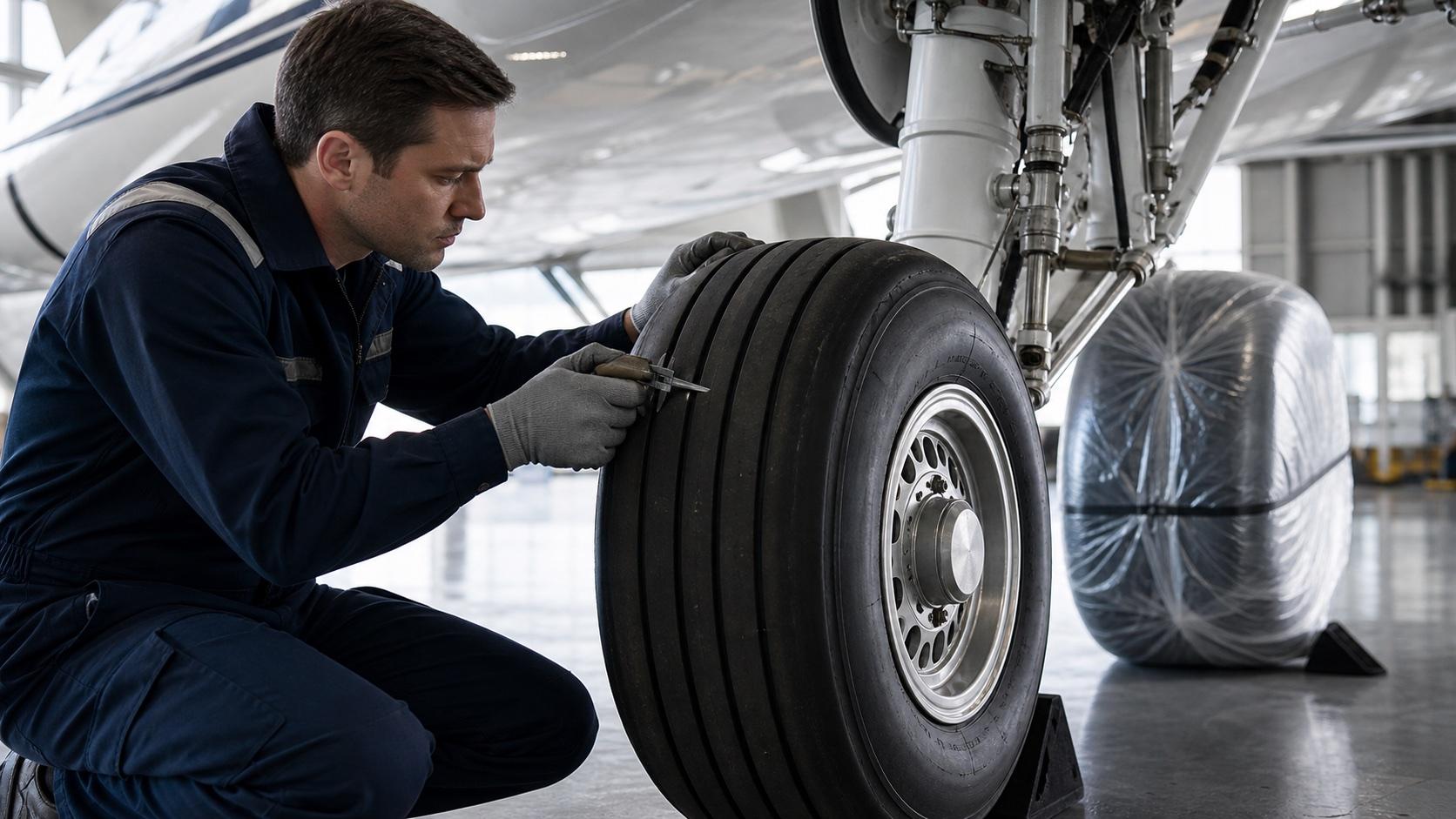
Quick answer
Business jet tire procurement should begin with the correct tire identification and aircraft applicability, then confirm quantity, required date, manufacturer information, date or shelf-life considerations, storage and packaging condition, and shipping requirements. Installation eligibility must be confirmed using current approved aircraft and tire manufacturer information.
Start with exact identification
Use the aircraft maintenance and parts information available to the operator to identify the required tire. Include aircraft model and position where helpful, but do not treat a general aircraft-family match as installation approval.
Ask the authorized maintenance team to resolve supersession or alternate questions before commitment.
Confirm date and storage information
Request the date information and storage history relevant to the tire and buyer’s policy. Inspect packaging and preservation, especially when the product will move through hot or humid environments.
The applicable tire and aircraft manufacturer instructions should control storage, inspection, inflation, installation, and service decisions.
Plan handling and transport
Tires are physical aviation products that need suitable packaging, labeling, and handling. Confirm shipment dimensions, weight, receiving capability, and any carrier requirements before choosing the route.
If assemblies or inflated products are involved, additional transport requirements may apply. Use qualified logistics personnel.
Prepare for receiving inspection
Compare the received tire, labels, records, packaging, and order. Record any damage, contamination, date concern, or identification mismatch and escalate it through the operator’s quality process before use.
Frequently asked questions
Can a tire be selected from aircraft model alone?
No. Confirm the exact tire identification and installation eligibility using current approved aircraft and manufacturer information.
Why does storage history matter for aircraft tires?
Environmental exposure, time, packaging, and preservation can affect acceptability under manufacturer and operator requirements.
What should an RFQ include?
Exact tire identification, aircraft context, quantity, required date, destination, date or shelf-life expectations, and documentation requirements.
Authoritative sources
This guide provides general procurement information and is not legal, customs, engineering, or airworthiness advice.
FAA AC 20-62E FAA Aircraft Safety