
Quick answer
An aviation parts traceability review should connect the physical component to its identity, stated condition, release or approval documentation, ownership or transaction history, and applicable life or maintenance status. The exact evidence required varies, so the operator’s authorized quality and maintenance teams should define acceptance criteria before purchase.
Traceability begins with identity
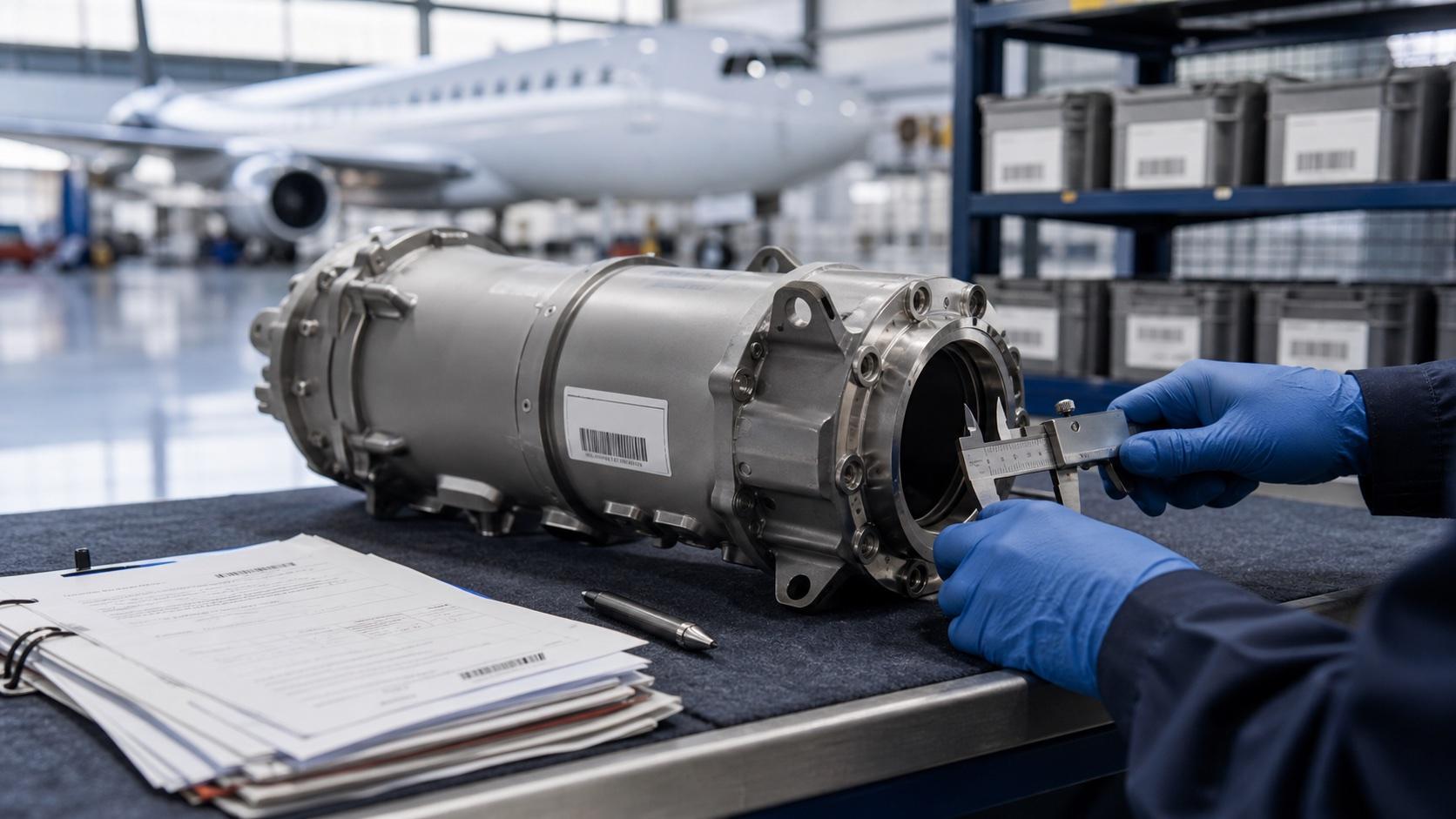
Confirm that the purchase description, physical identification, packaging, and records refer to the same component. Review part number, serial number when applicable, nomenclature, quantity, and modification status.
Resolve discrepancies before shipment. A small mismatch at the quote stage becomes a larger receiving problem.
Document the stated condition
Terms such as new, overhauled, repaired, and serviceable need supporting context. Buyers should ask who made the determination, under what authority or process, and which records support it.
FAA Advisory Circular 20-62E provides guidance on eligibility, quality, and identification of aeronautical replacement parts. Buyers should also follow the requirements applicable to their own authority and operation.
Review history and life status
For serialized, life-limited, or maintenance-significant components, determine what history is required to establish status. Depending on the component, that may include time or cycles, maintenance records, repair data, and trace to prior operators or suppliers.
Do not use a generic checklist as a substitute for component-specific engineering and quality review.
Prepare receiving inspection
Send the expected document list to the receiving team before the shipment arrives. Record discrepancies, quarantine questionable material, and preserve packaging and labels while the issue is investigated.
The FAA’s Suspected Unapproved Parts program explains how unapproved parts concerns can be reported in the United States. Other jurisdictions maintain their own channels and requirements.
Frequently asked questions
What is aviation parts traceability?
It is the documented connection between a component’s physical identity, condition, history, and supporting release or approval records.
Is a certificate alone enough to accept a part?
Not necessarily. Acceptance depends on the component, records, applicable rules, operator procedures, and review by authorized personnel.
What should happen when records conflict?
Pause acceptance, preserve the material and documentation, and escalate the discrepancy through the operator’s quality process.
Authoritative sources
This guide provides general procurement information and is not legal, customs, engineering, or airworthiness advice.
FAA AC 20-62E: Eligibility, Quality, and Identification of Aeronautical Replacement Parts FAA Suspected Unapproved Parts Program